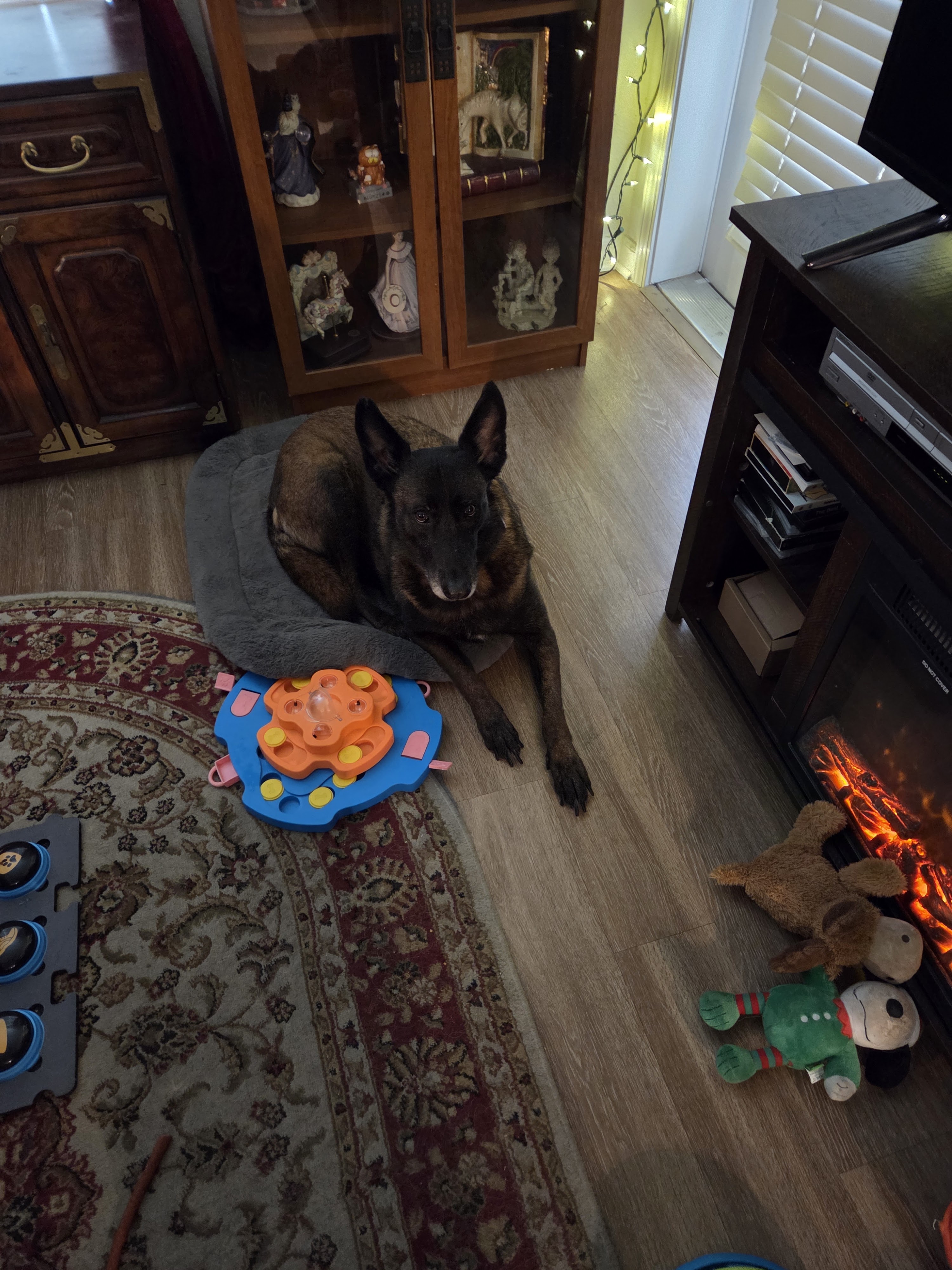

Sometimes, when Lady Priscilla leaps onto the agility table and stands tall, we’re struck by an uncanny vision. A beloved teacher in an old film, perched on a desk to challenge his students’ perspectives. Or the students at the end of Dead Poets Society, standing on their desks chanting “O Captain, My Captain” in solidarity. In those moments, her amber eyes catch the light with the same daring spark. The world seems to shift beneath her paws, as if she’s showing us that a new vantage point can transform the familiar into something extraordinary. It’s in those glimpses that we begin to understand the true meaning of “O Captain, My Captain.” Not just the words, but the spirit behind them. We half expect to hear a whisper in the rafters: Carpe diem. Seize the day.
O Captain My Captain Meaning in Dead Poets Society — and Dog Training
The phrase “O Captain, My Captain” has become synonymous with reverence, rebellion, and emotional transformation — especially after Dead Poets Society brought Walt Whitman’s poem into pop culture. But in the context of dog training and partnership, it takes on an even deeper meaning. This story reflects the moment a service dog begins to lead from within — when obedience becomes trust, and following becomes choosing. It’s part of a larger literary arc that includes One Child by Torey Hayden
and Jonathan Livingston Seagull, each showing how dogs (and people) evolve through emotional connection — not domination. You can explore all of our rescue dog stories here.
What Does O Captain! My Captain! Mean Literally?
Walt Whitman wrote O Captain! My Captain! in 1865 as an elegy for President Abraham Lincoln. In the poem, the “Captain” represents Lincoln, the “ship” is the United States, and the speaker mourns the leader’s death just as the nation reaches the end of the Civil War. It’s a metaphor for triumph and tragedy entwined — the leader who guided his people to safety but did not live to celebrate the victory.
What Does “O Captain, My Captain” Mean in Dead Poets Society?
In Dead Poets Society, students use “O Captain, My Captain” as a tribute to their unorthodox English teacher, Mr. Keating. By standing on their desks and addressing him with Whitman’s phrase, they reject conformity and honor his teachings about independent thought. The line becomes a symbol of loyalty, awakening, and personal growth — the moment a student begins to lead themselves from within.
What Does This Have to with Dog Training?
When we recall Dead Poets Society, it’s impossible not to draw parallels between that film and Lady Priscilla’s coming into her own. In that movie, an unconventional professor stands atop a desk and urges them to always look at things in a different way.
Perspective Is Power

We carry that lesson into our training sessions. Lady Priscilla has her own ways of reminding us to break free of conventional expectations. Instead of simply obeying commands by rote, she often pauses to consider why we ask, or whether there might be another approach. It’s as if she’s constantly whispering to us, “step up here with me, and see the world as I do.” We find ourselves heeding her unspoken invitation, discovering new angles on trust and learning.
Perspective alone isn’t the only lesson she shares with that famous classroom. We remember another scene from the film: a courtyard exercise in nonconformity. One by one, the students fall into step—except for a single boy who stands aside, declaring he’s “exercising [his] right not to walk.” The teacher’s response? A satisfied smile and the words, “My point precisely.”
The courage to choose one’s own path, even when others march to a different beat, was the true point of the exercise. Lady Priscilla is also learning to choose her own path, and we couldn’t be prouder. When she rearranges her space – dragging her blanket into a patch of sun or artfully laying out her toys – we don’t see a dog “misbehaving.” We see a thoughtful creature crafting comfort from her environment, much like a student finding her own stance.
And when she occasionally refuses a request or hesitates at a command, we’ve learned to listen. Often there’s a reason: a slippery floor she’d rather not trot across, or a moment of overload where she needs a breather. By giving her the agency to say “no” or “not yet,” we’re telling her that her judgment matters. Far from undermining our training, these small acts of independence strengthen it. After all, a service dog must think, not just obey. By having a say in her life, Lady Priscilla grows more confident and creative, and our bond grows stronger because of it. What some might label disobedience is, to us, a sign of deepening trust.
Two Puzzles, One Dog
Perhaps the most delightful evidence of her burgeoning autonomy came during puzzle time a few days ago. Lady Priscilla has a collection of brain-teaser toys—ingenious little contraptions with sliding panels, levers, and hidden compartments that conceal treats. Each puzzle is designed to make her think, to work one paw at a time to earn her reward. At first, she tackled them one by one, swiftly mastering each mechanism. A twist here, a nudge there—click! Another treat earned.
Before long, it was clear she found them too easy. So one quiet afternoon, she crafted a solution worthy of a creative scholar. With a determined huff, Lady Priscilla dragged two of her puzzles side by side. Casting a mischievous glance our way, she lay down Sphinx-like between them. Then, in a flourish that made our hearts skip, she placed a paw on each puzzle simultaneously. In this comically brilliant pose—left paw sliding a compartment open on one toy while the right paw flipped a lever on the other—our clever girl worked both puzzles at once.
We watched in breathless awe, utterly enchanted by her innovation. She had, in a single stroke, rewritten the rules of the game. Why settle for one challenge at a time when you can conquer two? The room was still except for the soft click and clack of pieces moving under her direction and the thump of her tail whenever a treat tumbled free. In that moment, Lady Priscilla was both student and teacher: solving problems we gave her, yet teaching us how limitless a motivated mind can be.
The Student Becomes the Master

We often talk about training as if we are the captains of this journey, charting the course for Lady Priscilla. But with each passing day, we realize we are crew on this ship together—and she has started taking the helm in ways small and profound. She shows us that obedience is not the end goal; understanding is. Her mission isn’t to become a cold, mechanical responder to cues, but a partner who trusts us enough to sometimes lead us, or to guide us to a perspective we hadn’t considered. And that’s the meaning behind “O Captain, My Captain.”
In the hushed atmosphere of our training space (a scene that could be lifted from any old academy hall), we trade wisdom back and forth like well-worn books. She learns the tasks we teach, yes, but we in turn learn from her—about patience, about curiosity, about the beauty of a mind unfettered by convention.
In our late-night musings, hot beverage in hand, we imagine ourselves standing in a grand library of learning, Lady Priscilla at our side. She might not recite Whitman or wear a school blazer, but she leads by example with every choice she makes. She reminds us of those young poets seizing the day, daring to stand on their desks or walk their own way. And just like that inspirational professor, we find ourselves smiling quietly when our pupil breaks a rule to illuminate a larger truth.
As Lady Priscilla lies sprawled between her two completed puzzles, chin resting on her paws in a puddle of afternoon sun, we catch each other’s eyes and understand the lesson she’s delivered. Sometimes the best way to learn is to let go of control and trust the one you’re teaching. Thank you for demonstrating the point of the exercise, Lady Priscilla. And the true meaning of “O Captain, My Captain.”
Moments like this are what gave rise to The Lady Priscilla Method, a training philosophy rooted in joy, curiosity, and second chances that all starts with building a happy puppyhood for rescue dogs, regardless of age.
Leave a Reply