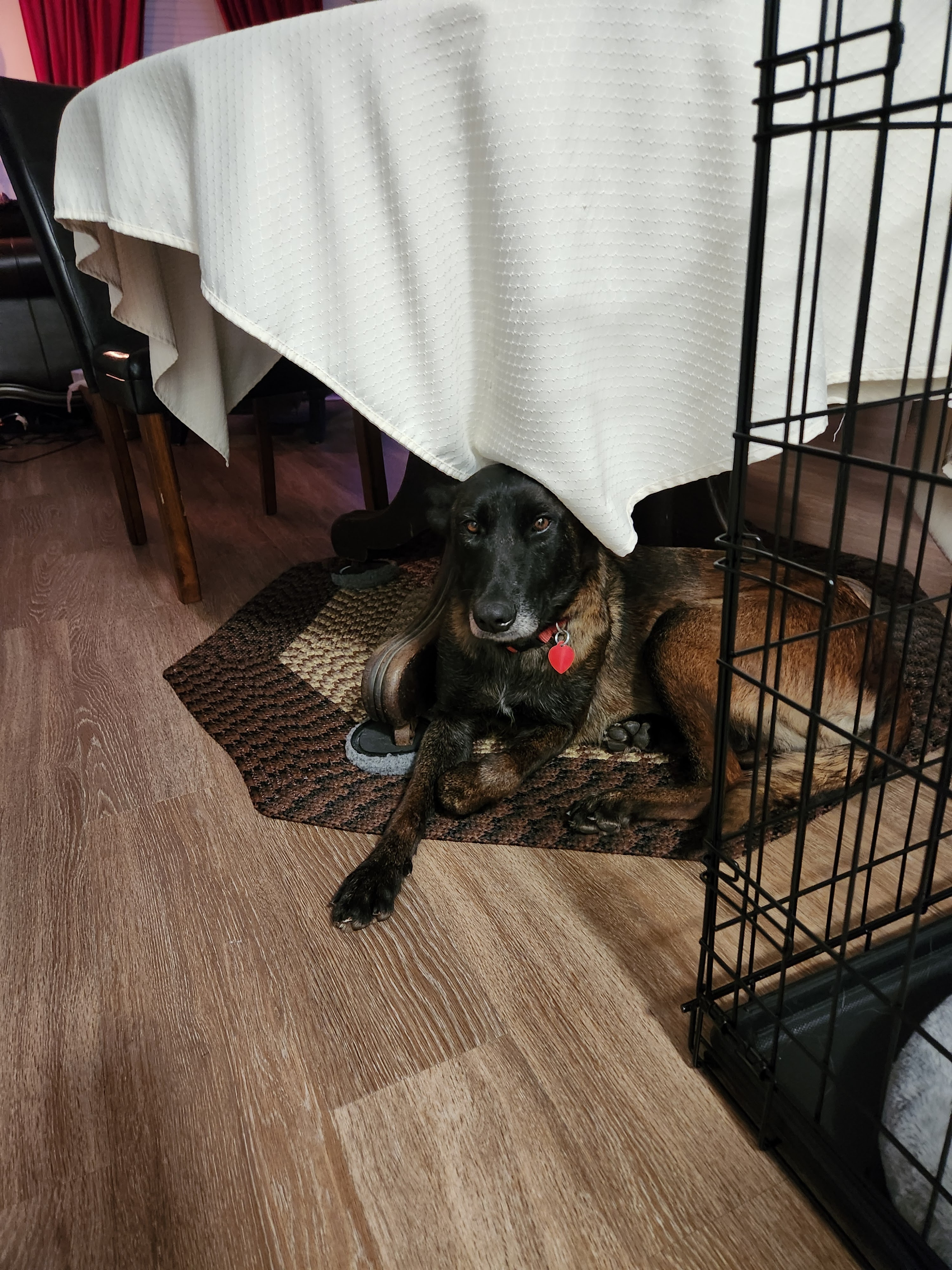

When we first brought Lady Priscilla home, the shelter described her as “shy but sweet.” That was accurate. What we didn’t realize—what we couldn’t have realized—was how deeply shut down she truly was, or how much patience rescue dog recovery would require.
She spent the entire ride home curled into a tight ball in the backseat. We had to stop at PetSmart on the way—since we hadn’t exactly planned on adopting a dog that day—and she followed me inside with soft, tentative steps, barely noticing the lights or sounds around her. She was so quiet, so inward, as if trying to disappear into herself.
At home, we laid the crate mat on the floor while we assembled her crate. She sniffed it once or twice, and then gratefully lay down. In that moment, I knew—we’d be okay. Maybe not quickly, and maybe not easily, but this wasn’t a lost cause. It was the very beginning of rescue dog recovery. We never could have imagined how far it would lead, or that one day she would start requesting full body hugs.
Settling Into a Routine
That first night, we placed her food and water bowls in the crate and left her alone. It was late, and what she needed most was sleep. The next day, we began a very simple, quiet routine.
Several times a day, she’d come out just long enough for us to slip on her lead and take her downstairs—a process that involved two long hallways and an elevator. She did what she needed to do, then headed straight back for the door. Once upstairs, she’d return to the crate like it was a bunker during a storm.
We never tried to coax her out. Instead, we spent time nearby, reading or talking softly to her from beside—not in front of—the crate. We didn’t want to loom. So we tossed in treats now and then. We left the crate door open at all times, except overnight when we gently closed it for safety and routine.
After a couple of days, we moved her food and water several steps away to the kitchen. She only approached them when we weren’t looking. We’d find the bowl slightly lower, the kibble disturbed, and we’d smile. She was testing the world beyond the threshold—on her terms.
Little Victories, Quiet Bravery
She began to stretch her invisible radius—just a little. First by laying underneath the dining table behind the crate. At first it was only for seconds at a time, but that turned into minutes, and then an hour.
A few days later, we noticed her peeking around the corner into the living room while we worked or watched TV. Every time, we responded with soft encouragement and treats gently tossed toward her, never insisting. No commands. No “Come!” Just: “You’re safe. We’re here.”
And then, nearly two weeks in, it happened.
She walked into the living room. She stepped onto the soft blanket we had placed in front of the electric fireplace and lay down. Not for a moment. Not for a test. For over an hour. That night, we cried. And celebrated. Our shut down shelter dog had finally become a brave explorer of her new home.
Once she crossed that threshold, joy followed close behind. It’s Never Too Late to Have a Happy Puppyhood tells the next part of her story.
What Helped Us (And Might Help You) with Rescue Dog Recovery
- Never forced interaction. Just presence, patience, and permission.
- An open crate door, a closed mouth, and a calm routine.
- Treats as quiet invitations, never bribes.
- Letting her choose when and how to step forward.
Final Thoughts
If you’ve just brought home a dog who hides in their crate, you’re not failing. You’re beginning. Some dogs bolt. Others freeze. Lady Priscilla froze. And the most powerful thing we did was wait—and let her learn that she didn’t have to stay shut down, slowly, in her own time. This became the foundation of The Lady Priscilla Method, our training philosophy grounded in the intersection of cognition, emotion, and behavior.
Every step she took felt like magic. But really, it was trust. Slowly earned. Quietly built. Stronger than steel. Now she doesn’t even seem like the same dog, walking proudly and confidently through theme parks, acing CGC training, and even getting ready to make her Halloween Horror Nights debut. But in the quiet moments, we remember. And we give thanks for how far she’s come.
Leave a Reply